How to Plan a Halloween Party Without Getting Overwhelmed
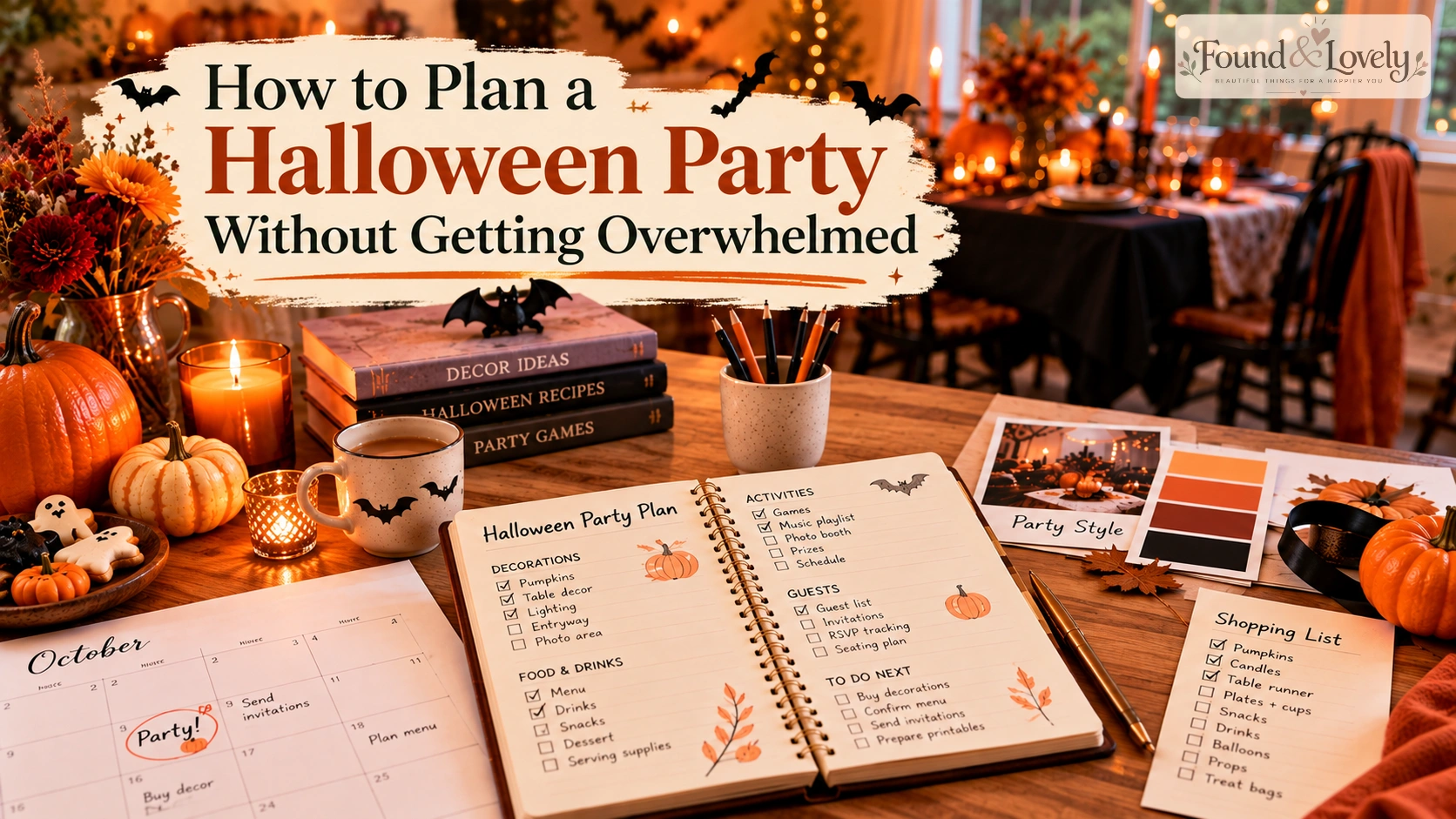
You decide to host a Halloween party. In the first five minutes, the idea feels wonderful: friendly gatherings, autumn drinks, clever costumes, and laughter around a warm, glowing table.
Then reality arrives. Half a dozen separate questions compete in your head at the exact same moment:
- • Who is coming? How many guests can your home realistically accommodate?
- • How much will everything cost? Are you about to overspend on items used once?
- • What food should you serve? Must you cook a sit-down meal or can you serve simple appetizers?
- • What decorations do you need? Where do you even begin decorating without clutter?
- • What will everyone do? Do guests need organized games, or will they simply chat?
- • When should you buy everything? How early do you start shopping to avoid rushing?
- • What critical detail have you forgotten? Will you run out of ice, cups, or trash bags?
If you feel an immediate wave of stress, you are not alone. Most hosts who feel overwhelmed do not struggle because party planning is inherently difficult. They struggle because every single decision demands attention at the exact same time.
The central truth of hosting: The problem is not necessarily that there is too much to do. It is that everything is competing for your attention at the same time.
When guest lists, grocery shopping, decorations, and schedules are jumbled together, every minor choice feels heavy. Organizing them into clear sequential steps restores immediate clarity.
This guide breaks Halloween party planning into manageable steps, taking decisions one at a time so you can host a memorable celebration without exhausting yourself in the process.
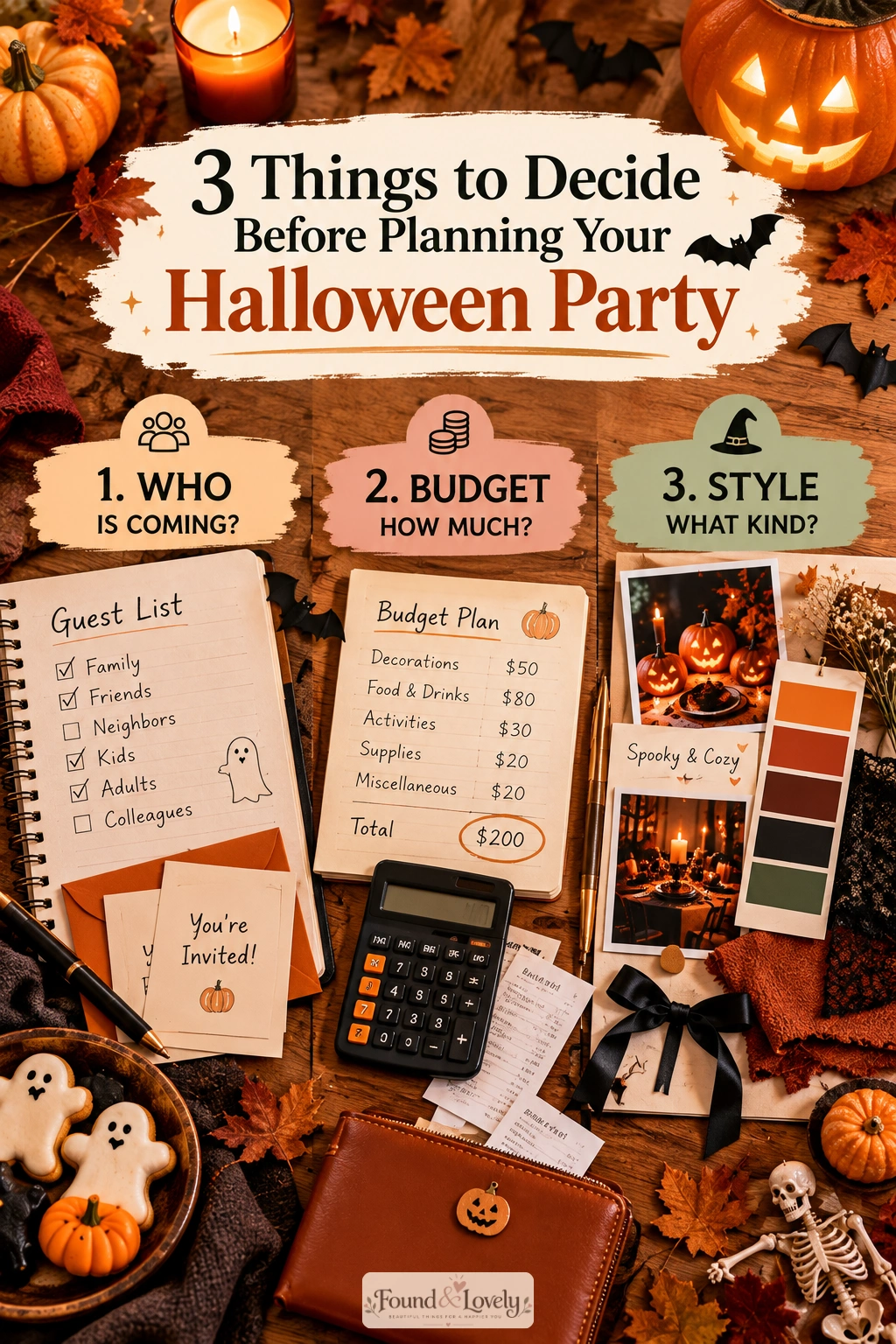
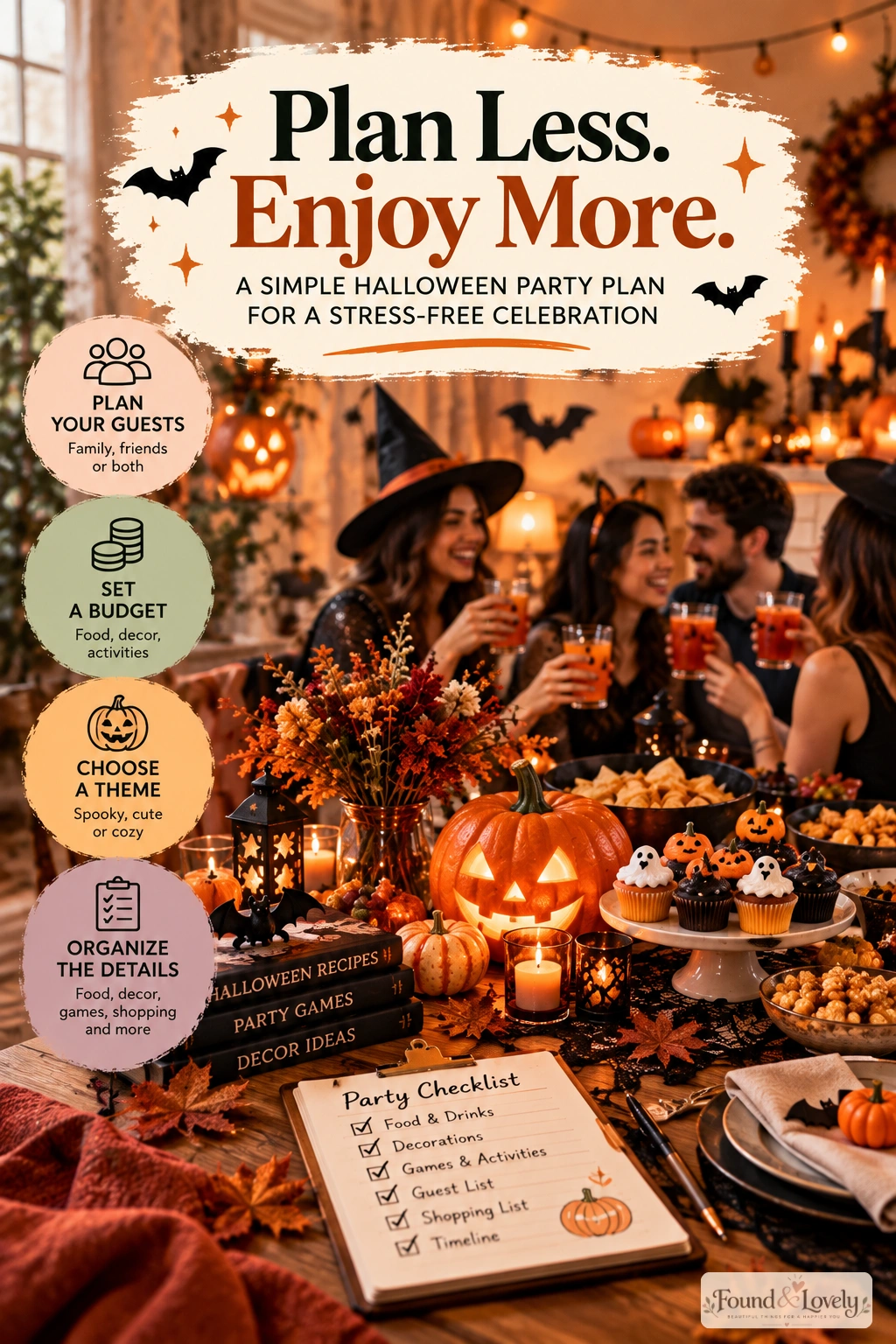
Start With the Three Decisions That Control Everything
Before browsing Pinterest for punch bowl ideas or buying festive supplies, stop and make three foundational decisions. Every dollar you spend and every hour you schedule flows directly from them.
1. Who's coming?
Your guest list determines almost every practical reality of your gathering:
- Adults, kids, or both? A party with toddlers and school-age children requires child-safe decor, allergy awareness, and earlier timing than an evening gathering for friends or coworkers.
- Approximate guest count: Ten people fit comfortably around most living room seating areas. Twenty-five guests require rethinking furniture layout, coat storage, and bathroom traffic. A good rule of thumb is allowing roughly twelve to fifteen square feet of usable floor space per mingling guest.
- The guest mix: Mixing close family, colleagues, and neighborhood acquaintances changes the social dynamic. When guests do not already know one another well, simple icebreakers or shared activities help them feel at ease.
- Plus-ones: Clarify invitations early so you are never surprised by five unexpected arrivals when food and drinks have already been portioned.
Until your guest count is fixed within a close estimate, you cannot accurately calculate food, drinks, or seating. Settle this first.
2. What's your budget?
The objective of budgeting is not to spend a particular dollar figure. It is simply knowing what you are comfortable spending before shopping begins.
Without a predetermined limit, small expenses quietly multiply. A few specialty ingredients, several packages of themed paper plates, and yard decorations quickly add up. Divide your spending into practical buckets:
A valuable host habit is shopping your own kitchen pantry and existing home decor first before purchasing anything new. You often have platters, bowls, and candleholders that work beautifully with a simple seasonal touch.
3. What kind of party do you actually want?
Parties expand needlessly when they lack a defined style. Decide on one clear concept:
- A cozy autumn dinner with hearty soup and background jazz
- A lively costume party with specialty drinks and upbeat music
- A family Halloween party with scavenger games, cider, and pumpkin treats
- A relaxed gathering of close friends for horror films and popcorn
Choosing your general direction prevents scope creep. If you decide on a casual gathering, you instantly know you do not need an elaborate multi-course menu, dry ice machines, or complicated party staging.
Plan the Food Without Making It Complicated
Halloween party food does not need to become a second project. Baking intricate themed pastries and juggling multiple hot pans guarantees you will spend your party standing over a stove instead of enjoying your guests.
This formula provides generous variety while keeping kitchen preparation manageable on party day.
Practical Catering Strategies
- • Buffet over sit-down dining: A self-serve station keeps traffic flowing naturally, accommodates varying arrival times, and frees you from plating meals individually.
- • Mix homemade and store-bought: If you prepare a big batch of chili, pulled pork, or baked pasta at home, pair it with store-bought cider donuts, tortilla chips, pretzels, and fresh dips. Guests appreciate good food; they do not expect everything to be made from scratch.
- • Easy-to-eat foods: Guests in costume appreciate bites that do not require balancing knives and forks on their laps. Sliders, savory hand pies, skewers, and bite-sized snacks keep clothes clean and hands free.
- • Accommodate dietary needs early: When collecting RSVPs, ask guests about nut allergies, vegetarian diets, or gluten sensitivities. Offering one hearty vegetarian option and clearly labeling snacks avoids confusion.
- • Self-serve drinks: Set up a drink station with a dispenser of warm spiced apple cider, sparkling water with sliced fruit, and seasonal beers or wines. Self-serve stations eliminate the need for a dedicated bartender.
Choose food you can realistically prepare while also getting the rest of your house and yourself ready.
Decide What Everyone Will Do
A party does not need a packed entertainment schedule. Over-scheduled evenings feel rushed. Guests usually look forward to talking, admiring costumes, and relaxing in a festive atmosphere.
You do not need ten activities. Two or three good options are plenty to provide shape to the evening:
Low-Pressure Social Ideas
Halloween trivia cards placed on side tables, a costume contest voting box (funniest, most creative, spookiest), or a curated background music playlist that builds gently throughout the night.
Engaging Group Games
A short costume parade for kids, a spooky mystery guessing game, pumpkin decorating with washable markers, or an indoor/outdoor scavenger hunt.
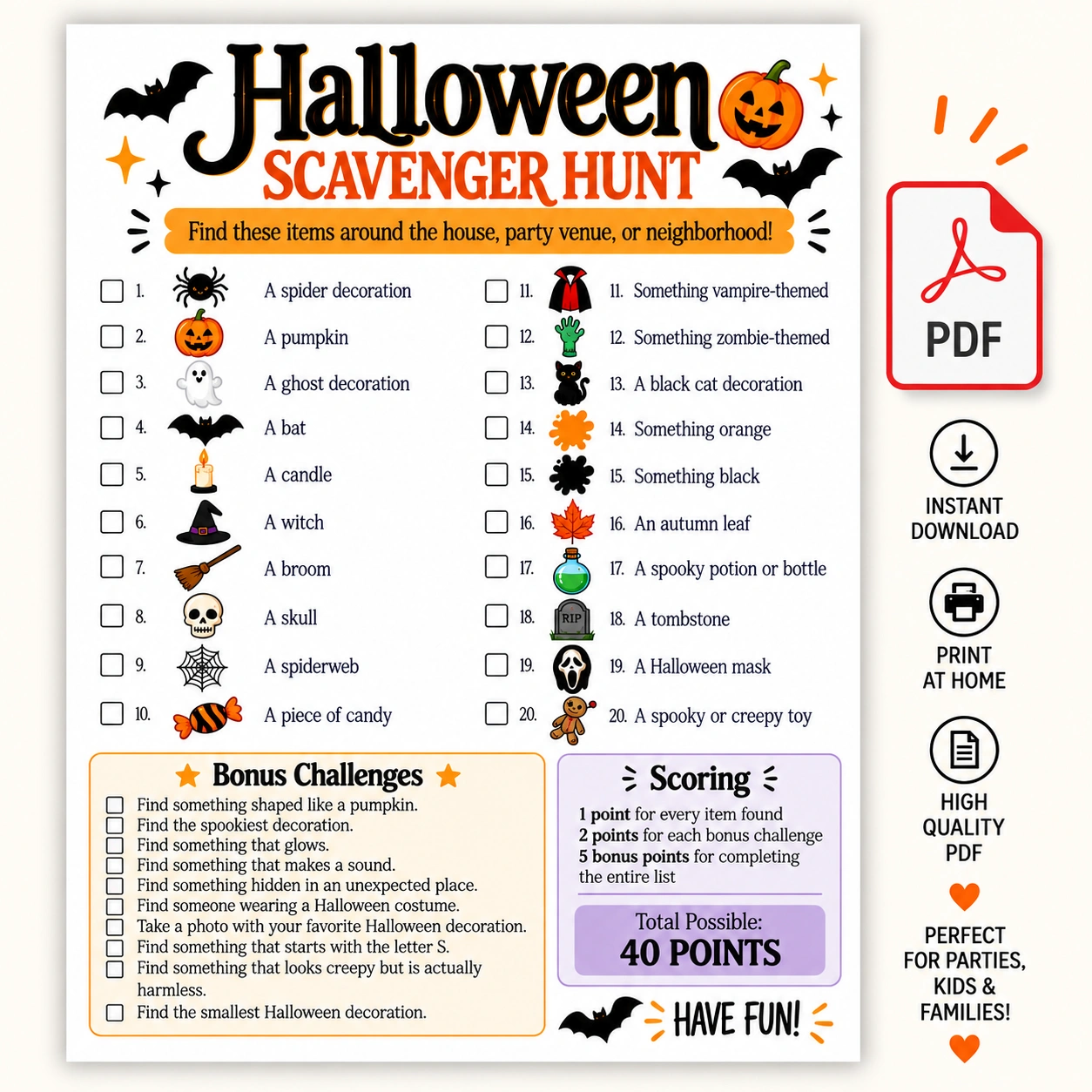
Interactive Scavenger Hunts
When hosting family or kids, a scavenger hunt is an easy way to get guests moving without requiring continuous hosting. Our printable Halloween Scavenger Hunt cards provide ready-to-use clue cards that take minutes to set up around your home or yard.
Always preserve room for organic conversation. If guests are laughing and talking, do not interrupt them for a scheduled game. Follow the natural energy in the room.
Get the Free Halloween Party Survival Guide
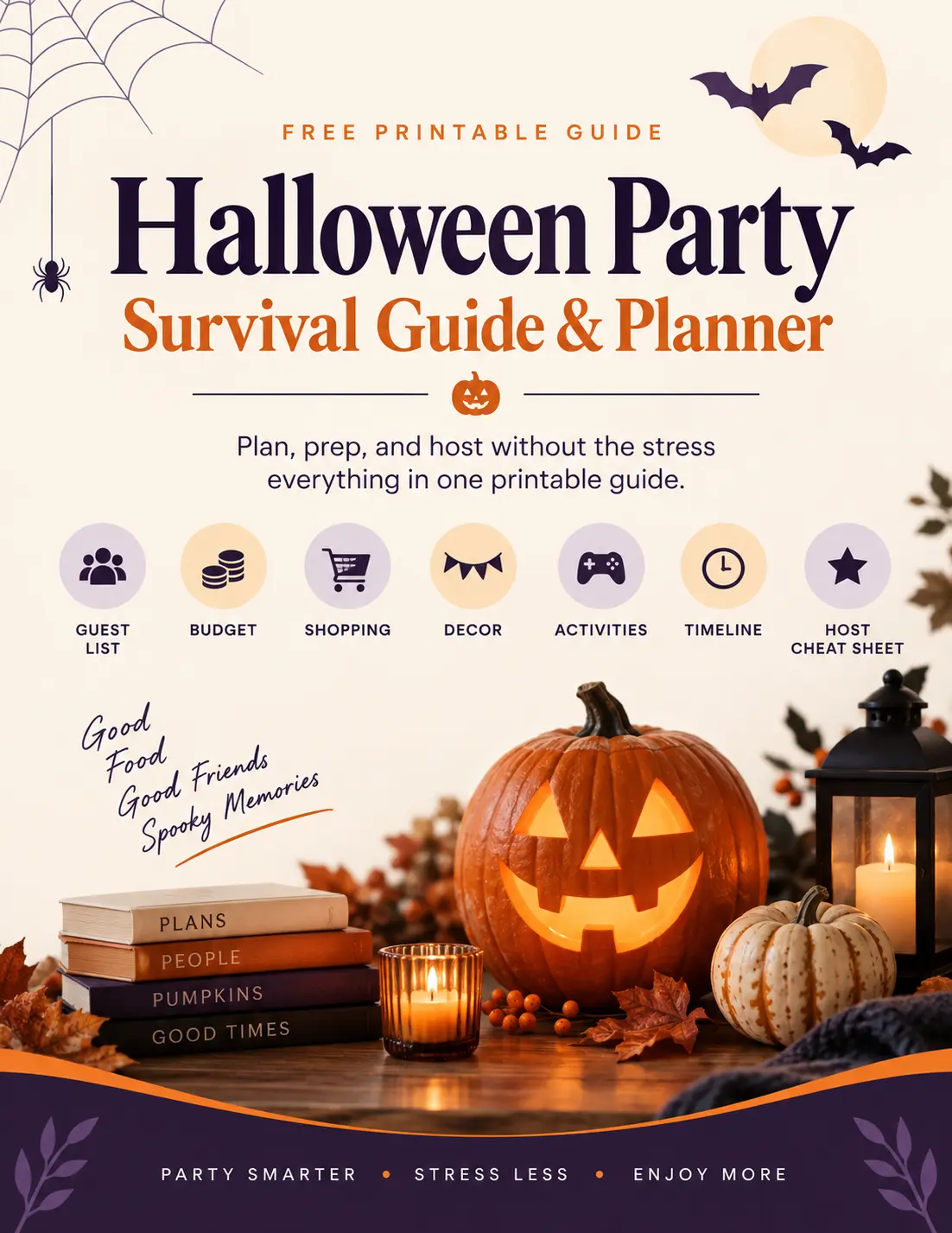
Want the planning checklist in one place? Get the free Halloween Party Survival Guide & Planner delivered to your inbox.
Free instant delivery to your inbox. No spam, ever.
Keep Decorations Under Control
Seasonal store aisles are tempting. It is easy to accumulate random decorations without realizing they do not share a cohesive style. To avoid cluttered rooms, prioritize sightlines guests actually see and stick to one visual theme.
Prioritize the Five Key Areas
- Entryway: A seasonal wreath, two real pumpkins, and warm porch lighting signal the celebration begins right at the front door.
- Main party area: Dim overhead ceiling lights and use table lamps, string lights, or warm flameless candles. Warm lighting (around 2700K) does most of the decorating work for you.
- Food & drink table: A simple linen runner, scattered mini gourds, and clean glassware make even store-bought snacks look abundant and intentional.
- Bathroom: Guests visit this space alone. Fresh hand towels, seasonal soap, and a candle create an unexpectedly polished impression.
- Optional photo area: If guests dress in costumes, clear one wall, hang a simple backdrop, and provide flattering lighting.
Choose One Visual Direction
Whether you prefer classic Halloween (warm amber and pumpkins), cute/kawaii (friendly ghosts and pastel accents), gothic (dark plum, black lace, and brass), autumn (warm foliage and wood), witchy, or spooky: choose one aesthetic.
Core principle: Pick a look, choose a few focal decorations, and stop there. Restraint feels intentional; clutter creates visual noise.
Build One Shopping List
Nothing raises stress like four separate emergency trips to the grocery store on party day. Consolidate every purchase into one organized list:
Food
- Main meal ingredients
- Appetizers and snack platters
- Drinks and signature mixers
- Dessert items
- Allergy-friendly alternatives
Decorations
- Focal room decorations
- Table runners and accents
- String lights or flameless candles
- Hanging supplies and painter's tape
Activities
- Game printouts and cards
- Small prizes or party favors
- Pens, markers, and supplies
Party Supplies
- Plates, cups, and napkins
- Cutlery and serving spoons
- Heavy-duty trash bags
- Ice bags and cooler storage
Leave a dedicated blank section for last-minute items remembered later. One organized list is easier to manage than scattered reminders.
Give Everything a Place on the Calendar
When tasks lack a scheduled time, they linger as mental clutter. Assigning each chore to a specific timeframe keeps planning manageable and orderly:
2 to 3 Weeks Before
Set your guest list, party date, and budget. Choose your party style, menu formula, and primary activities. Send invitations with a clear RSVP date.
1 to 2 Weeks Before
Order durable decorations and paper party supplies. Build playlists. Print game materials and scavenger hunt clues. Finalize food recipes and confirm guest numbers.
3 to 5 Days Before
Buy remaining supplies and non-perishables. Put up focal decorations and set up tables. Clean the house now so you are not scrubbing floors on party morning. Prepare anything that can be frozen or chilled ahead.
Day Before
Clean high-traffic areas, set out serving dishes with labels, and organize supplies. Prepare overnight foods (pasta salads, dips, marinades) and pick up ice. Review your checklist one last time.
Party Day
Finish food prep, arrange table settings, put out drinks, and start music. Stop one full hour before guests arrive to get yourself dressed, relaxed, and ready to enjoy your evening.
Create a "Don't Forget" List
Parties rarely falter because of minor menu tweaks; they stumble when hosts run out of practical essentials mid-party. Keep these commonly overlooked items ready:
What to Do If You're Already Overwhelmed
If you are staring at a half-finished checklist and feeling anxious, stop trying to solve everything simultaneously. Take a deep breath and reset your perspective.
Switch to a "minimum viable party" approach. Focus exclusively on five core decisions first:
Everything else can follow. A good Halloween party does not require elaborate decorations or a packed minute-by-minute schedule. The goal is to create an enjoyable experience, not a perfect event. Your guests are coming to celebrate with you, not inspect your home.
Your Simple Halloween Party Planning Checklist
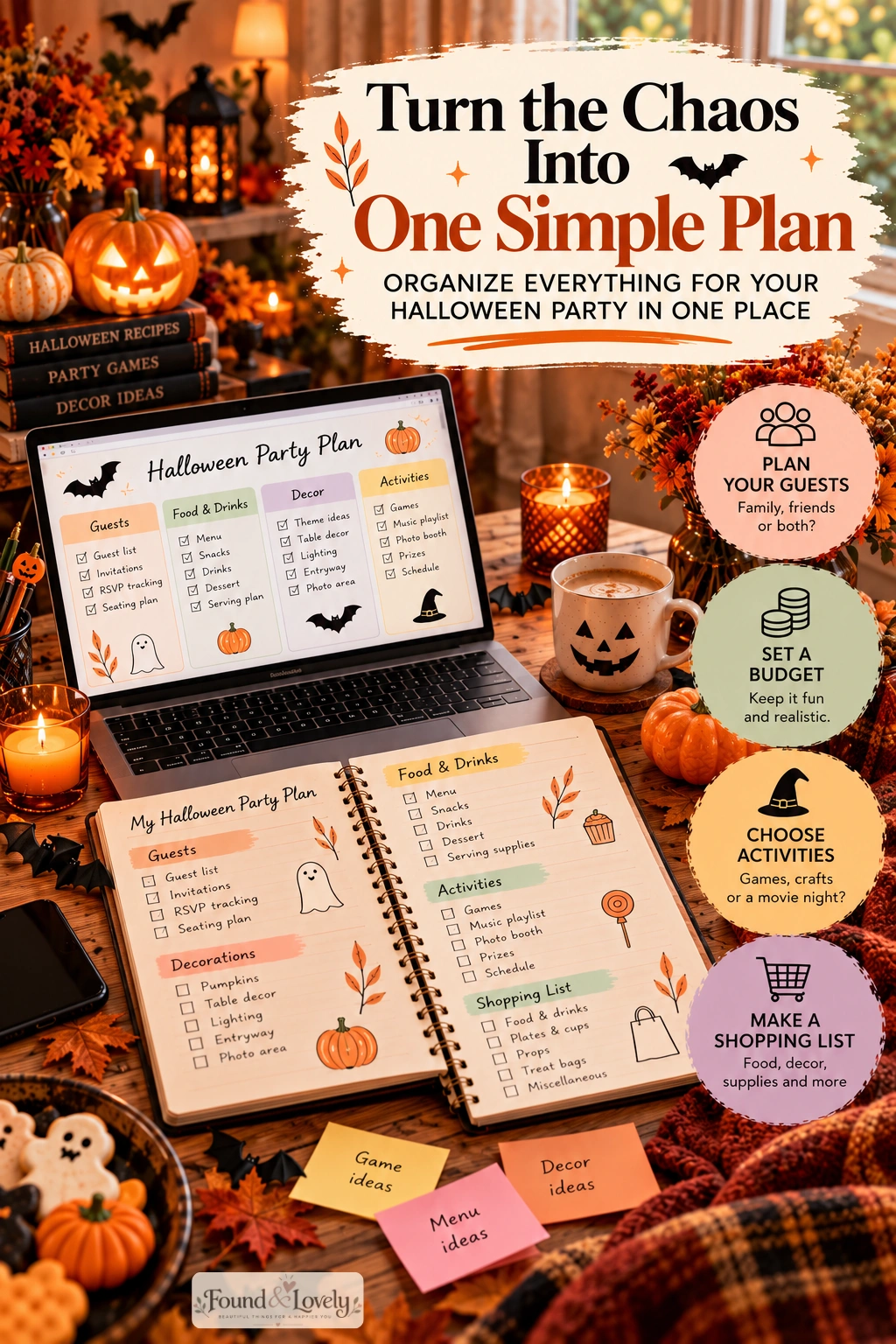
Use this scannable checklist to guide your planning from start to finish:
Before Planning
Food
Activities
Decorations
Shopping
Final Preparation
When a Halloween Party Planning Tool Makes Sense
If you are comfortable using a notebook or checklist, that is perfectly fine. Paper lists work well for small gatherings.
Once guests, budget, shopping, food, decorations, activities, and the timeline are all moving at once, keeping everything in separate places can become its own problem.
Meet CryptDesk
Your Halloween Party Command Center.
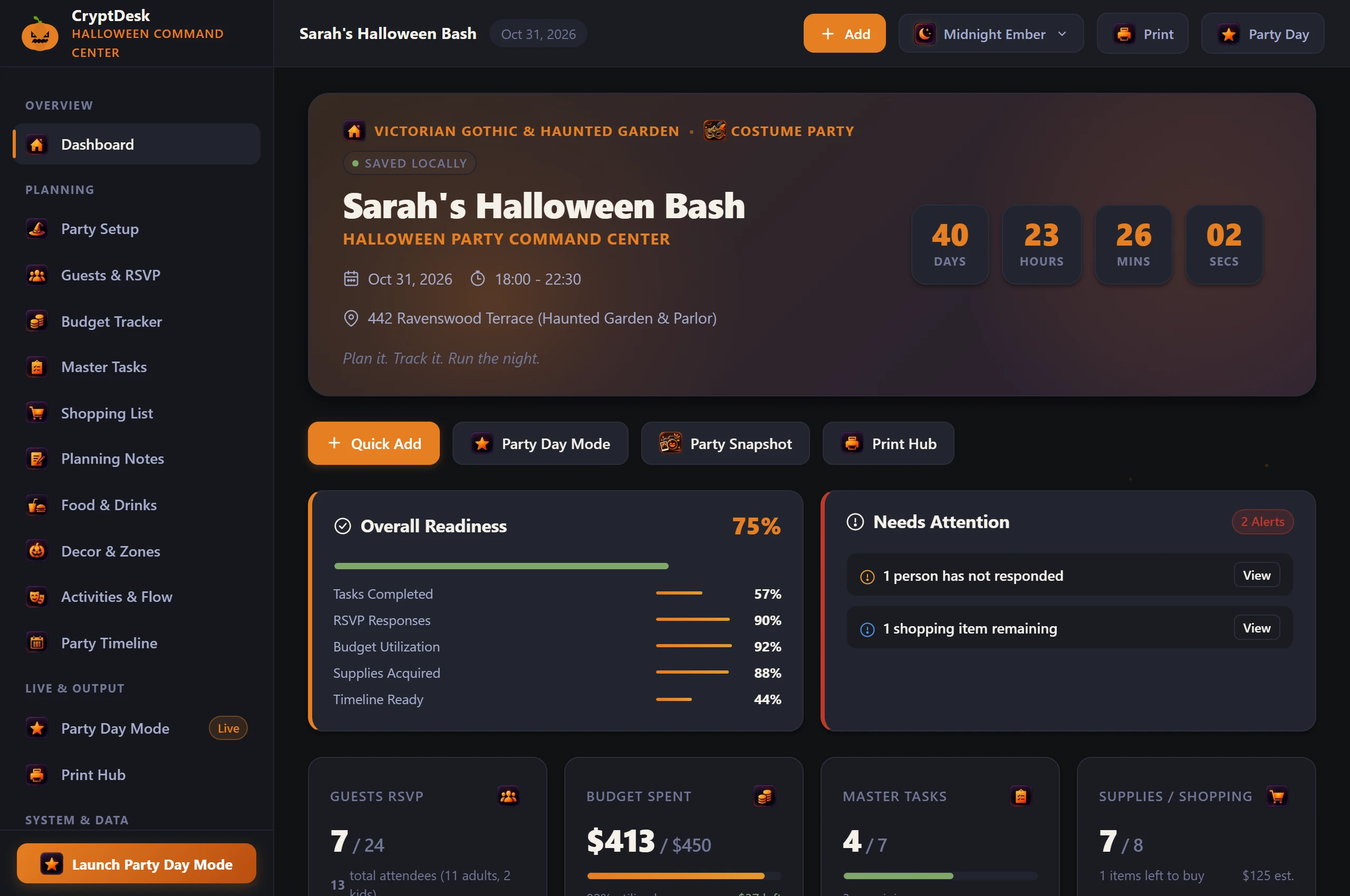
CryptDesk organizes every essential planning piece in one unified interface:
Planning Made Simple, Celebrating Made Lovely
Halloween party planning does not have to mean doing everything at once. Whenever the details in your head start expanding, return to the simple progression:
Take each step in order. Allow yourself flexibility when small details shift. And keep the guiding principle in mind:
"The goal isn't to plan the perfect Halloween party. It's to plan one you can actually enjoy."